
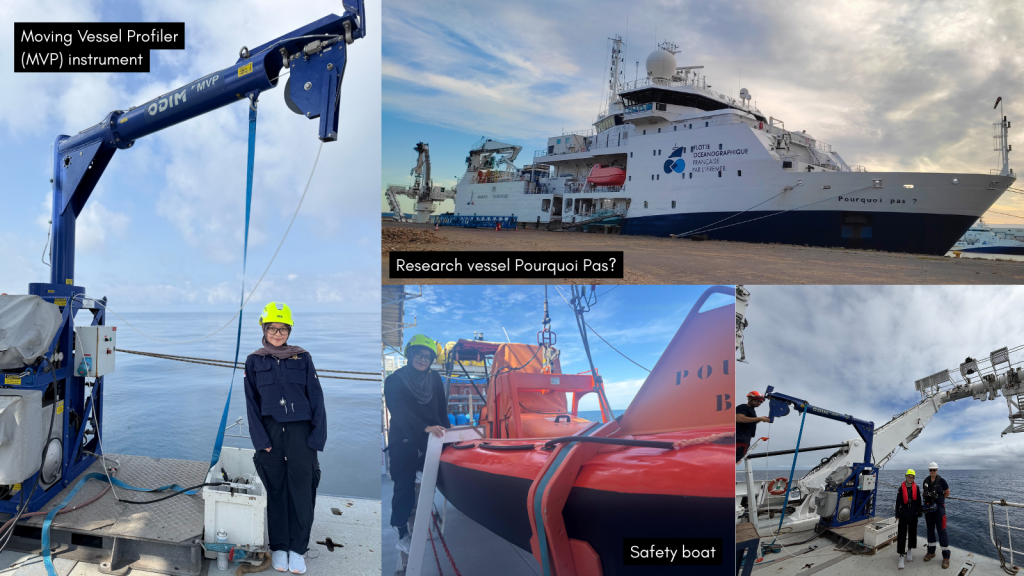
LORIENT and BREST, France – What does it take to conduct scientific observations beneath the ocean surface? For Mentari Khoerunnisa Azzahra, the answer came through two weeks at sea aboard the French oceanographic research vessel Pourquoi Pas?.
Representing Indonesia, Mentari was selected as one of four participants in the EWH–Shom 2026 On-Board Opportunity, part of the International Hydrographic Organization (IHO) Empowering Women in Hydrography Project. She joined Luissiana Nicolle Anchante Jurado from Peru, Maria Navarro from Spain, and Elizabeth Davis from the United Kingdom in gaining hands-on experience in hydrographic and oceanographic survey activities.
The participants joined the third phase of the SOLMINEUR campaign, led by Shom, France’s national hydrographic and oceanographic office. The programme provided an opportunity to experience the working environment of an oceanographic survey mission while learning directly from scientists and technical experts.
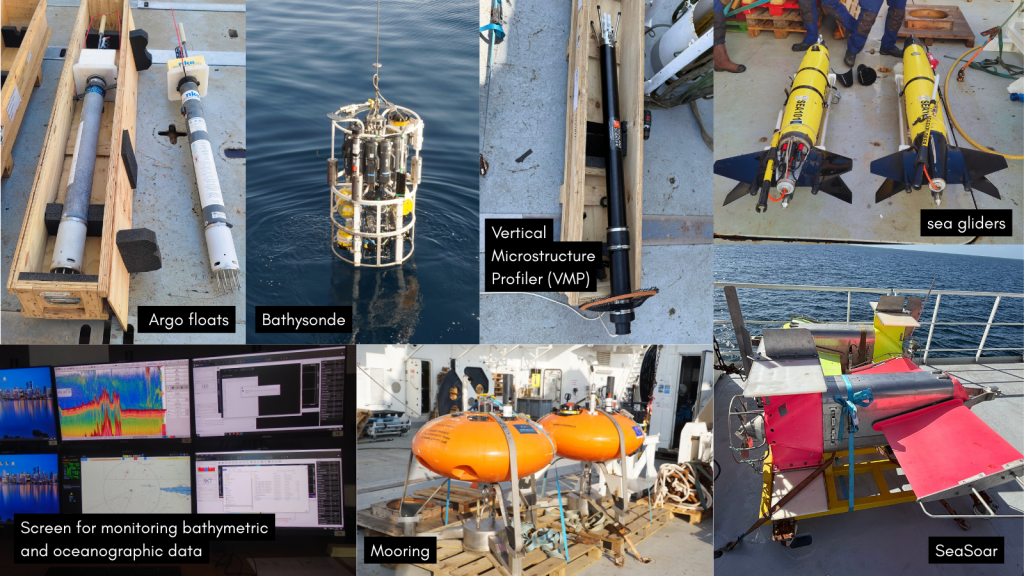
One of the most valuable aspects of the programme was the opportunity to become familiar with a wide range of oceanographic instruments. During the survey, participants worked with and learned about equipment designed to observe different characteristics of the ocean, including the Vertical Microstructure Profiler (VMP), Moving Vessel Profiler (MVP), bathysonde, Argo floats, sea gliders, and oceanographic moorings.
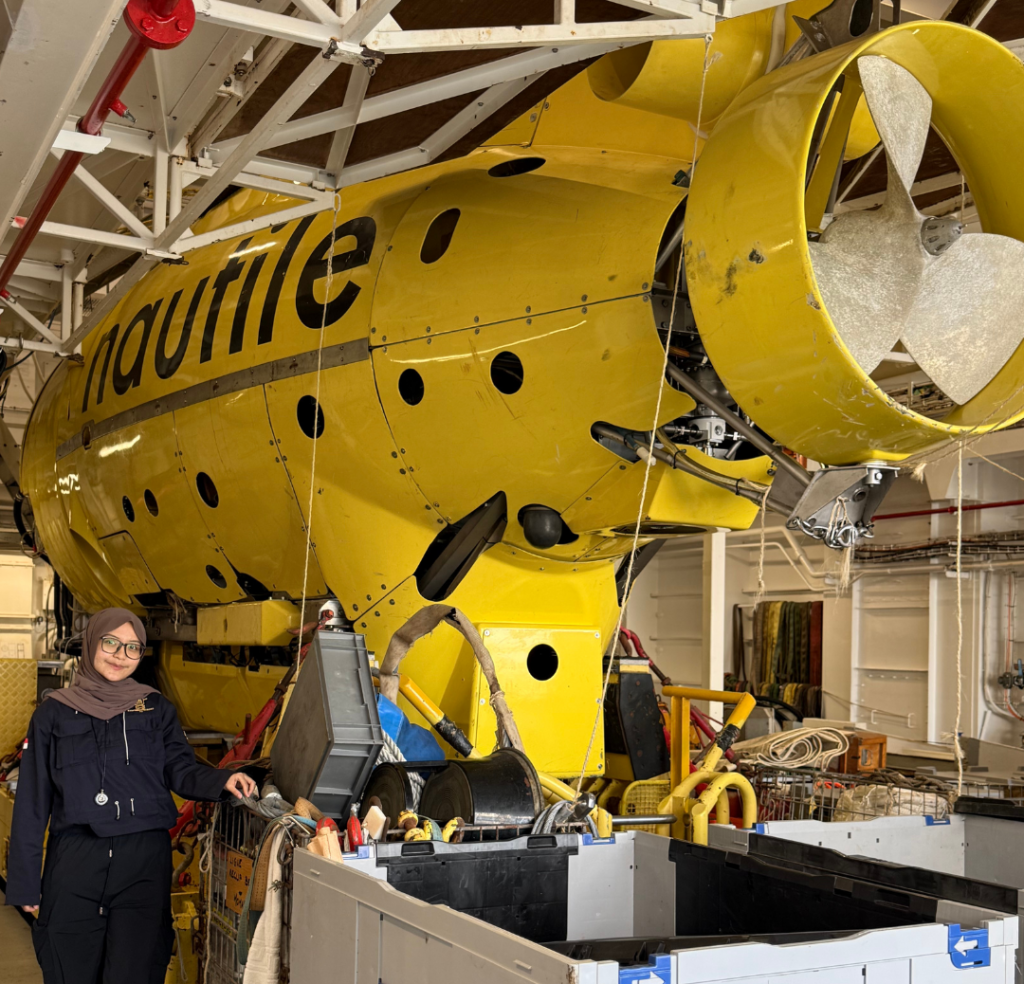
The programme also introduced participants to advanced ocean research technologies, including the Nautile, a deep-sea submersible capable of reaching depths of up to 6,000 metres. Although it was not deployed during Mentari’s survey activities, the participants were introduced to its design, capabilities, and scientific applications, as well as to how Shom and the French marine research institute Ifremer use oceanographic data to support marine research.
One of Mentari’s direct experiences involved assisting with the deployment of a Vertical Microstructure Profiler. The operation required careful coordination while paying out the instrument cable, providing a first-hand understanding of the practical challenges involved in collecting scientific data at sea.
The programme was not limited to instrument deployment. Throughout the mission, Mentari attended scientific sessions that introduced participants to the research objectives behind the campaign and a range of oceanographic processes, including coastal fronts, eddies and currents, solitons, and anticyclonic processes.
Along with the daily fieldwork, it was a great chance to learn directly from the experts. Daily sessions with Franck Dumas of the Institut Français de Recherche pour l’Exploitation de la Mer (Ifremer) anchored the team in the mission’s core scientific goals. Through discussions with Emilien Débonnet, a hydrographic surveyor at Shom, Mentari gained critical insights into how hydrographic surveys support oceanographic research—particularly the role of bathymetry data. Further presentations from scientists broadened the scope, delving into complex subjects like submarine canyon sediment processes, soliton analysis, shipborne GNSS development, and internal tide simulations.
These discussions provided a broader perspective on how field observations, oceanographic instrumentation, and numerical models can be combined to investigate complex marine processes.
The experience also provided practical exposure to ship navigation. Mentari learned how to measure bearings manually, interpret radar information, input coordinates, and navigate using digital charts. These activities offered valuable insight into the navigational procedures that support safe and effective scientific operations at sea.

For Mentari, the programme was also an important international learning experience. Working alongside participants, scientists, and technical experts from different countries and professional backgrounds provided opportunities to communicate and collaborate in an international environment.
The experience also strengthened Mentari’s motivation to continue her academic and professional journey in hydrography and oceanography. Exposure to ongoing research and discussions with scientists encouraged her to further develop her research and prepare for the next stage of her academic career.
Through the IHO Empowering Women in Hydrography Project, initiatives such as the EWH–Shom 2026 On-Board Opportunity provide opportunities for women to gain practical exposure to international institutions, advanced technologies, and real-world survey operations.
For Hydrography ITB, Mentari’s participation demonstrates the value of international collaboration and hands-on experience in developing future hydrographers and marine scientists. From deploying oceanographic instruments and learning navigation to engaging with researchers working on complex marine processes, the experience transformed theoretical knowledge into practical understanding.
For Mentari, this journey was more than a training opportunity—it was an opportunity to step into the wider world of international hydrography and ocean science, bringing new perspectives and experiences to the next stage of her academic and professional journey.